Request An Appointment
What is a dental implant?
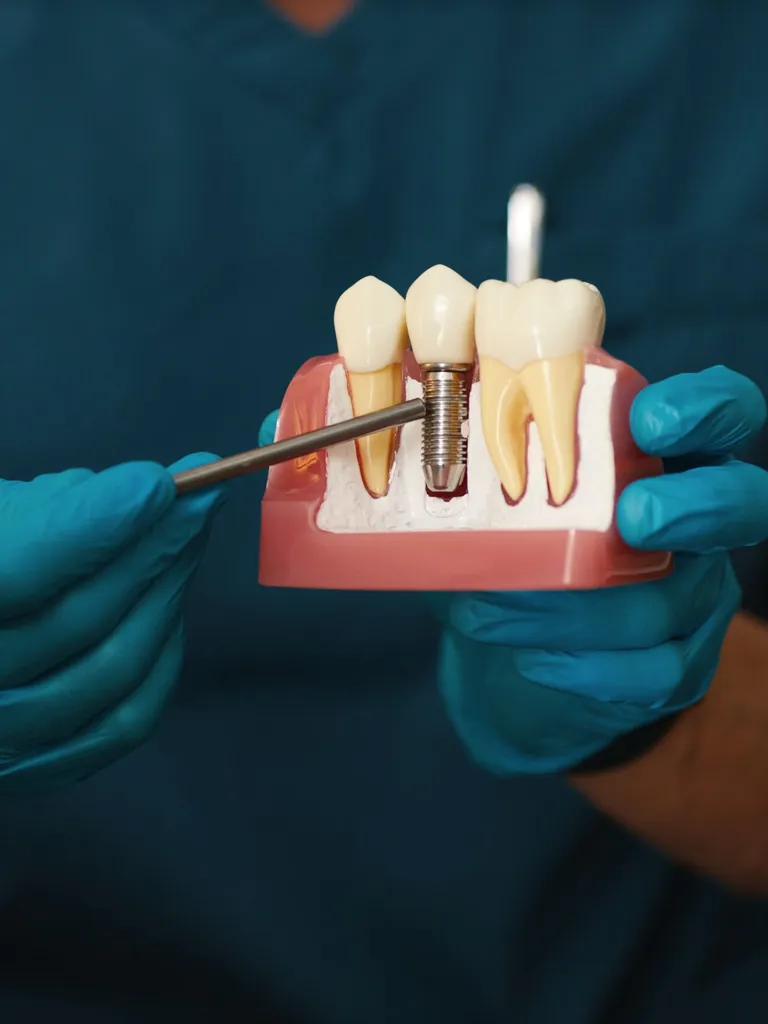
An implant system typically includes three parts: a post placed in the jaw, an abutment or connector, and the replacement tooth or teeth attached above it. The post and the visible restoration do different jobs, which is why your treatment plan should explain both.
Implants can restore chewing function and appearance and may help preserve the supporting bone where a tooth is missing. Those potential benefits do not remove the need for surgery, healing time, daily cleaning and an assessment of the risks.
One tooth, several teeth or a full arch
The design depends on the number and location of missing teeth, the bone available and your bite:
- One missing tooth: A single implant supports a crown, without preparing the neighboring teeth.
- Several missing teeth: Implants can support a bridge, so each missing tooth does not always need its own implant. Our crowns and bridges page explains how traditional bridges compare.
- A full arch or a loose denture: Implants can help anchor a denture so it moves less when you eat and speak. Our dentures and partials page covers removable options.
The number of missing teeth alone does not decide the final design or the number of implants. Dr. Mizrahi explains the options that fit your mouth after the examination.
Need a Dental Appointment?
Who is a good candidate for dental implants?
Implants are generally placed in adults whose jaw growth is complete, and there is no upper age limit. The main requirements are enough healthy bone to support the implant and gums that are free of active disease.
Overall health and healing ability also matter. Smoking or vaping, uncontrolled diabetes, local infection and untreated gum disease can increase the risk of complications. Share your complete health history, including medications and tobacco use, before a plan is finalized.
Some patients need other care first, such as gum disease treatment, treatment of decay or removal of a tooth that cannot be saved. Dr. Mizrahi explains what needs to be resolved first and whether a bridge or denture may better match your health, timeline or priorities.
How Dr. Mizrahi plans implant treatment
Your evaluation begins with an examination of the gap, the neighboring teeth, your gums and your bite, along with a review of your health history. Implant planning typically uses panoramic imaging or a 3D cone-beam CT scan, both taken at our office, to assess bone height and width and the position of nearby structures such as nerves and the sinus. Our digital X-rays page explains these images.
Dr. Mizrahi then reviews the findings with you, explains whether an implant is a suitable option and outlines the stages, the expected timeline and what you will have in the space while the implant heals. Your treatment plan explains who performs each stage and where it takes place.
Implant treatment happens in stages
Implant care is a sequence of appointments rather than a single procedure. A typical plan includes:
- Evaluation and planning: Examination, health history and imaging to decide whether an implant is suitable and where it should go.
- Preparatory care, if needed: Treatment of gum disease or decay, or tooth extraction when a damaged tooth must be removed first.
- Implant placement: The post is placed in the jaw at the planned site under local anesthesia.
- Healing: The bone fuses around the implant over several months. You may have a temporary replacement during this time.
- Final restoration: The crown, bridge or denture is made by an outside dental laboratory, then checked for fit, bite and appearance before it is attached.
Before you start, ask what you will have in the space between stages and when the final restoration is expected. Placing an implant at the same visit as an extraction is possible in some cases, but it depends on the condition of the site and is decided in your individual plan.
Local anesthesia is used for implant placement, and nitrous oxide is available from Dr. Mizrahi. Oral or IV sedation is provided by our visiting periodontist when appropriate. Tell us about anxiety, previous dental experiences and any medical conditions so the comfort plan can be discussed.
Implants, bridges or dentures?
Each option replaces missing teeth in a different way. These are different approaches with different commitments, not better and worse versions of the same treatment.
| Option | How it is supported | What to consider |
|---|---|---|
| Implant crown or bridge | Implants in the jaw | Fixed in place and does not rely on neighboring teeth. Requires surgery and several months of healing. |
| Traditional bridge | Crowns on the neighboring teeth | Fixed in place and usually completed in two visits. The supporting teeth must be prepared, and that change is not reversible. |
| Removable partial denture | Remaining natural teeth and gums | No surgery. Removed daily for cleaning and may need adjustment over time. |
| Full denture | Gums and jaw | Replaces a full arch without surgery. Implants can be added to improve stability when suitable. |
Compare the complete proposal: preparation, surgery where relevant, healing, the final replacement, daily care and future maintenance. The best choice is the one whose suitability and practical commitments you understand.
Risks and possible complications
Possible complications include infection, delayed healing, injury to nearby teeth or the sinus, nerve-related numbness, a loose abutment screw and failure of the implant itself, according to the U.S. Food and Drug Administration. Your consent discussion should identify which risks matter most for your health and the treatment site.
Complications can occur soon after placement or years later, and a failed implant may need further treatment or replacement. Smoking and uncontrolled diabetes increase some of these risks. Before any MRI or X-ray elsewhere, tell the imaging team that you have dental implants.
Caring for your implant
An implant cannot get a cavity, but the gums and bone around it can become inflamed or infected. Brush twice daily and clean around the implant every day; floss threaders or interdental brushes can help reach under a bridge or around an implant crown. Ask us to demonstrate a technique suited to your restoration.
Keep your regular dental exams and cleanings so the implant, the surrounding gums and the restoration can be checked. Call or text us promptly about looseness, bleeding, swelling or pain around an implant rather than waiting for your next visit.
Frequently Asked Questions
How long does the dental implant process take?
The jawbone typically takes three to nine months to fuse around an implant, according to Cleveland Clinic. The full timeline also depends on whether an extraction or gum treatment is needed first and on the type of restoration. Dr. Mizrahi gives you an estimated timeline after your examination.
Does getting an implant hurt?
The area is numbed with local anesthesia, so you may feel pressure but should not feel pain during placement. Slight discomfort and swelling afterward are normal, and Cleveland Clinic notes that most people feel like themselves within about a week. Nitrous oxide and, when appropriate, oral or IV sedation are available.
How long do dental implants last?
With proper care, the implant itself can often last a lifetime, according to Cleveland Clinic, while the crown, bridge or denture attached to it may eventually need repair or replacement. Implants can still fail, so daily cleaning and regular checkups remain important.
Is the implant itself the replacement tooth?
Not by itself. The implant provides support in the jaw, while the visible replacement is a crown, bridge or denture connected to it. Your treatment plan should explain every component, not only the surgical stage.
Can implants replace more than one missing tooth?
Yes. Implants can support a bridge or a denture, so each missing tooth does not always need its own implant. The evaluation explains the design recommended for the number and location of your missing teeth.
Can I get an implant right after an extraction?
Sometimes, but it depends on the condition of the site and must be decided in your individual plan. Ask whether placement is proposed at the extraction or after healing, and what replacement, if any, you will have in the meantime.
Can implants fail even after they have healed?
Yes. Complications and failure can occur early or years later, often involving infection or problems with the supporting gums and bone. Continue recommended care and contact the office about pain, looseness or difficulty cleaning.
What if I do not want surgery?
Traditional bridges and removable dentures replace missing teeth without implant surgery, although their suitability depends on your mouth. Tell Dr. Mizrahi your preferences so the comparison addresses the full treatment commitment, not only the appearance of the final tooth.
What should an implant estimate include?
Check whether the estimate covers the evaluation and imaging, any preparatory care, implant placement, the abutment, the final restoration and follow-up visits. A price for the implant post alone is not the same as a complete tooth-replacement plan.
Visit Cloud 9 Dental of Encino
Our office is at 16260 Ventura Blvd Suite 410, Encino, CA 91436. We welcome patients from Encino and nearby Sherman Oaks, Studio City, Valley Village, Tarzana, Woodland Hills, Lake Balboa and Reseda.
Office hours are Monday through Friday, 8:00 a.m. to 5:00 p.m. Saturday visits are available by appointment only. The office is closed on Sunday.
Call or text (818) 986-7411 to request an implant consultation with Dr. Yoni Mizrahi. If you have recent X-rays or 3D scans from another office, let us know so they can be considered.