Request An Appointment
Dental crowns
Dental crowns are custom-made caps designed to cover and protect damaged, weakened or discolored teeth.
Crown options include porcelain, zirconia and other ceramic restorations. Dr. Mizrahi recommends a material according to the tooth’s location, remaining structure, bite forces and your aesthetic goals, balancing durability, function and a natural appearance. For a visible front tooth, matching neighboring teeth may be a central concern; for a back tooth, the design also needs to account for chewing forces and available space.
Appearance is not the only deciding factor. Tell Dr. Mizrahi about grinding, previous fractures or material sensitivities so the proposed restoration can be considered in the context of your mouth.
Dental crowns may be used to:
- Protect cracked or chipped teeth
- Restore selected teeth after root canal treatment by an endodontist; see our root canal evaluation page
- Cover large fillings or severe discoloration
- Support dental bridges for missing teeth
With proper care, crowns can last for many years. Their condition should be reviewed during regular dental visits.
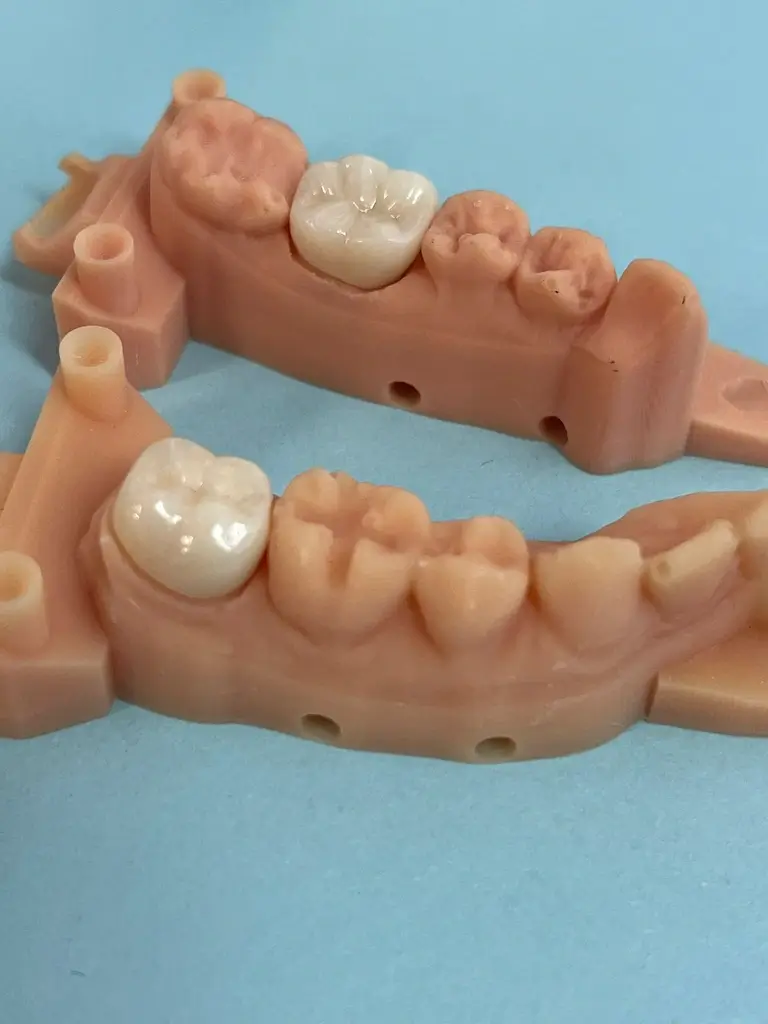
3D Scanning & Fabrication of Crowns
Need a Dental Appointment?
Dental bridges
Dental bridges fill gaps left by missing teeth to help restore chewing function and appearance.
Bridge designs differ in how they are supported. The right design depends on the location of the gap, the condition of neighboring teeth and bone, your bite and your overall oral health:
- Traditional bridges: Supported by crowns on the neighboring teeth. This is a common option for replacing missing teeth.
- Implant-supported bridges: Supported by dental implants rather than natural teeth. Dr. Mizrahi evaluates patients for implant-supported restorations when clinically appropriate, including for people replacing several missing teeth.
- Cantilever bridges: Supported by a tooth on one side of a gap. This design may be discussed in selected situations.
- Maryland bridges: Bonded to neighboring teeth. This design may also be discussed in selected situations, depending on tooth position, available support and bite forces.
Crown, bridge or another treatment?
The right choice depends first on whether the tooth is still present and can be restored. These treatments solve different problems rather than representing better and worse versions of the same procedure.
| Your concern | What we evaluate |
|---|---|
| A damaged tooth that is still present | Whether a filling, an inlay or onlay, or a crown provides the coverage and protection the tooth needs |
| One or more missing teeth | Whether a bridge, dental implant or removable partial denture fits the available support and your goals |
| A small cosmetic change to an otherwise healthy front tooth | Whether bonding or a veneer would address the concern without full crown coverage |
We aim to preserve as much healthy tooth structure as possible. For example, a tooth with a small cavity or minor damage may need only a tooth-colored composite filling. A tooth with a larger damaged area but enough healthy structure may be considered for an inlay or onlay, which restores the affected portion without covering the whole tooth. Extensive decay, a fracture, a large existing restoration or significant structural weakness may call for a full-coverage crown.
To decide, Dr. Mizrahi weighs the remaining healthy tooth structure, the extent of decay or fractures, the condition of existing restorations, bite forces, tooth location, gum health and your aesthetic goals.
A traditional bridge generally involves preparing supporting teeth. Discuss this commitment alongside alternatives, including dental implants and partial dentures, so you can choose based on your dental health, long-term goals and budget.
For a smaller repair, our tooth-colored fillings page explains a more limited restoration. Not every tooth is suitable for a filling.
If the tooth is healthy and the concern is primarily its appearance, compare cosmetic dentistry options before choosing full coverage. A crown and a veneer do not serve the same structural purpose.
Planning your restoration with Dr. Mizrahi
- A clear reason for treatment: Understand whether the goal is protecting a damaged tooth, replacing missing teeth or both.
- An individualized design: Review the supporting teeth, your bite and the appearance of the restoration.
- Comfort during care: Discuss local anesthesia and tell us about sensitivity or dental anxiety before treatment.
- A maintenance plan: Learn how to clean the restoration and when a change in fit needs attention.
What to expect when getting a crown or bridge
Treatment begins with a comprehensive examination of the tooth or gap, the gums, existing restorations and the bite. Appropriate dental X-rays and other records help assess the support available and whether other care is needed first.
Preparing a tooth for a crown involves removing tooth structure to make room for the restoration. That change is not reversible, so we explain the reason for coverage and the alternatives before treatment; a traditional bridge also involves preparing its supporting teeth.
Crowns and bridges are made by an outside dental laboratory, so treatment typically involves two appointments:
- First visit: Dr. Mizrahi prepares the tooth, removes any decay or compromised structure, and takes digital scans with an intraoral scanner or impressions to guide fabrication. When appropriate, a temporary crown or bridge protects the prepared teeth and helps maintain comfort and function while the final restoration is made.
- Second visit: Dr. Mizrahi checks the fit, shade, bite and overall appearance before permanently cementing or bonding the restoration.
Some patients need additional appointments, for example when preliminary treatment or laboratory adjustments are required. We explain the expected timeline, temporary care and any extra steps before you begin.
Caring for the restoration and the teeth underneath
A crown does not make the underlying tooth immune to decay. The restoration itself cannot develop a cavity, but the natural tooth underneath and around its margin can. Brush twice daily, paying attention to the margin, and clean between teeth each day.
A bridge also needs cleaning beneath the replacement tooth, not just over its visible surface. A floss threader or appropriately sized interdental brush may help; ask us to demonstrate a technique suited to your restoration.
Avoid chewing very hard objects or using your teeth as tools. Report loosening, a sharp edge, persistent chewing pain or a change in your bite. Avoid trying to glue a restoration back or adjust it yourself, and continue dental exams and cleanings.
Frequently Asked Questions
How long do crowns and bridges last?
They are designed for long-term function, but they are not lifetime restorations and their lifespan cannot be guaranteed. Many last about 10 to 15 years or longer with proper care, while some need replacement sooner. Longevity depends on oral hygiene, remaining tooth structure, gum health, bite forces, grinding or clenching and regular dental maintenance.
What determines the treatment plan for a crown or bridge?
The examination assesses remaining tooth structure, missing teeth, gum health and the support available for a restoration. Any additional treatment and the proposed material are explained before you decide how to proceed.
Are crowns and bridges painful?
Local anesthesia is used when clinically appropriate during tooth preparation. Mild sensitivity or gum soreness can occur afterward and typically improves as the area heals; contact the office if pain persists, your bite feels uneven or the restoration feels loose.
Visit Cloud 9 Dental of Encino
Our office is at 16260 Ventura Blvd Suite 410, Encino, CA 91436. We welcome patients from Encino and nearby Sherman Oaks, Studio City, Valley Village, Tarzana, Woodland Hills, Lake Balboa and Reseda.
Office hours are Monday through Friday, 8:00 a.m. to 5:00 p.m. Saturday visits are available by appointment only. The office is closed on Sunday.
Call (818) 986-7411 to request an appointment with Dr. Yoni Mizrahi. Tell us what you would like help with so we can guide you to the appropriate visit.